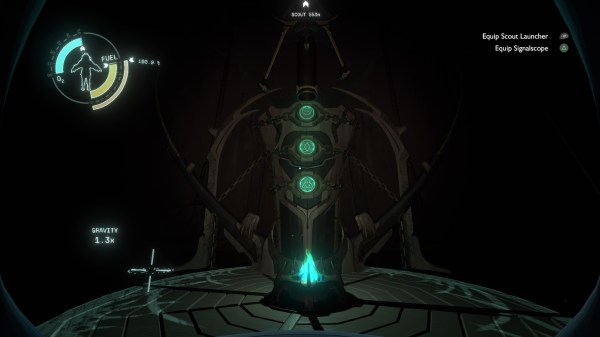
When I first saw the trailer for “Outer Wilds’” first and only expansion, I was curious. The trailer showed very little: dark spaces and mysterious structures, things not entirely unfamiliar to the base game, yet portrayed in a way the game hadn’t really done. The trailer focused on a sense of dread both in the shots and the way the music was composed, something closer to the likes of the “Alien” film’s famous siren trailer. I was excited for more in this world but wasn’t sure I would be able to handle this change in tone as a notorious coward when it comes to horror, especially things emerging from the dark. As such, I steeled myself and waited patiently.
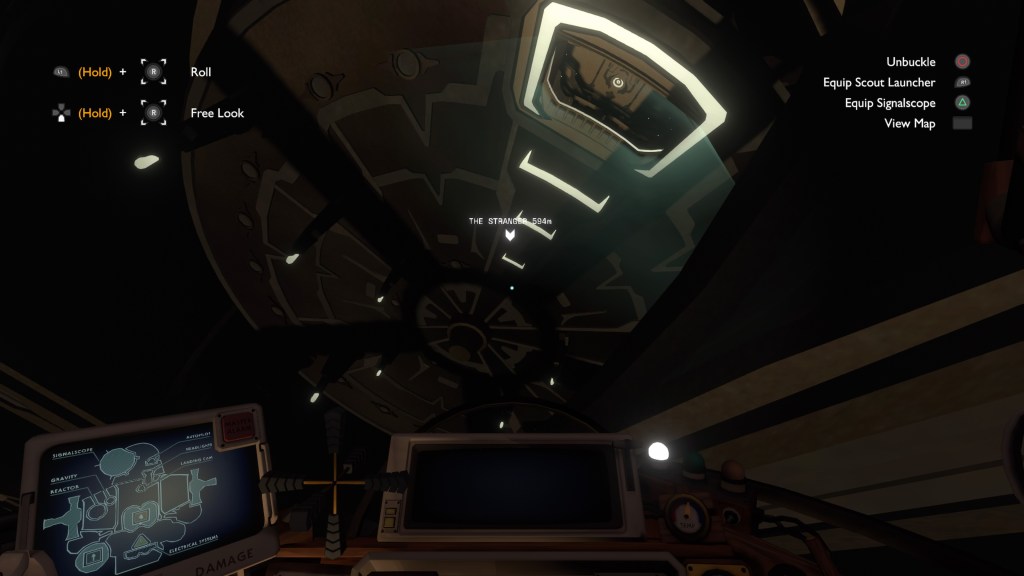
On September 28, 2021, the DLC quietly released and I dove in, excited but found myself engaging with something even more different to the main game than I expected. The general “Outer Wilds” vibes are there: scouring a mysterious astral body to discover secrets and understand what it does and why but the other vibes are gone. No more reading letters from the Nomai people to one another establishing their personalities and goals with your handy translator tool. In “Echoes of the Eye,” The Stranger, a structure appearing in a cloaking device in the familiar solar system, found through a pretty good “Outer Wilds-y” navigation puzzle, is filled with a language our Hearthian protagonist cannot translate, let alone understand and instead, scattered throughout the empty, wooden halls, are slide reels. The implication is simple: the Inhabitants of The Stranger, a species of Owl-people with Elk horns, who are as cute as they are vaguely spooky, seem to be a much more visually communicative people than the habitually notation-making Nomai from the base game. Most of their instructions are done through the slide reels, including the biggest mystery of the Stranger: why are there slide reels with information burned out in some places and where did all the inhabitants go? The latter is answered pretty quickly in your tour of the Stranger as you discover rooms with the decaying skeletons of what remains of the people onboard. Fear is a major theme of this adventure.

This DLC differs from the base game heavily in both tone and mechanics. The base “Outer Wilds” experience was signposted by going to planets and exploring whatever caught your eye on the game’s 22 minute loop. Learning what you can and going wherever you think a new clue might be. “Echoes of the Eye” has you heading to the same place and scouring sections of it for slide reels to point you where you need to go. The signposting and points of interest, as a result, are much harder to pin down in Echoes of the Eye. This is especially true when the game drops you into the Shadow Zone on your investigative journey. Stripped of your friendly jetpack and flashlight you are popped into a realm of pure darkness where the only tool you have to navigate is a mysterious lantern-like artifact. Limitation in movement and pitch black navigation is the name of the game for the bulk of the journey, all the while looking out for and avoiding the residents in this new phase who are not so happy with a new intruder walking around their special home. Despite their displeasure with you, however, should you get caught by them while holding your trusty lantern, they will simply blow out the flame sending you back to where you entered the space. This is the primary loop you will experience in depth: Find things in the one part of the Stranger to guide you in the other, wander the darkness and try to make your way without getting caught until you figure out what the denizens are doing here and why.
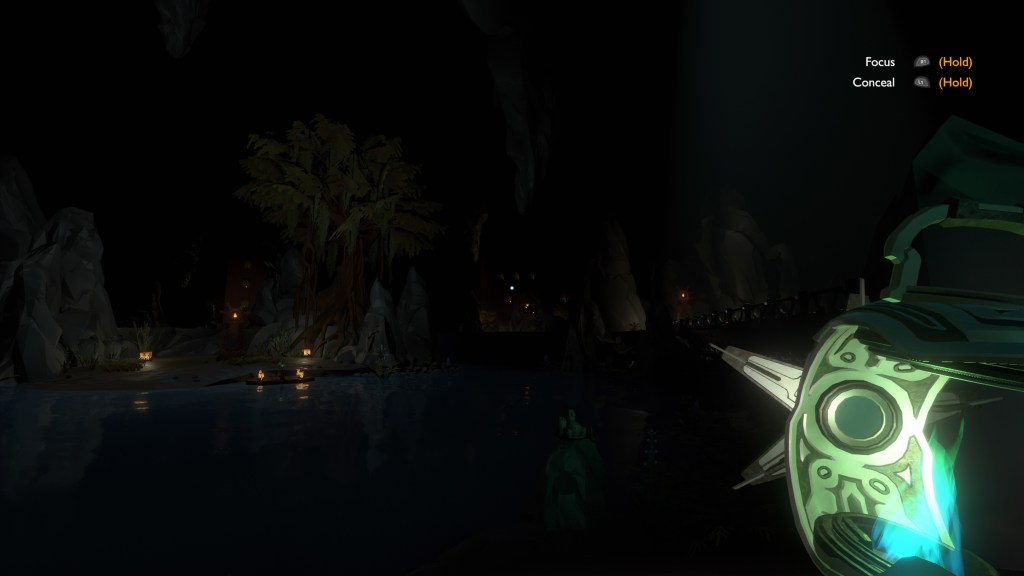
There are aspects to this, unfortunately, that are more trying than they are intriguing. While wandering the darkness you have two options to use your lantern: Conceal and Focus. Conceal hides your flame from would be pursuers and Focus shines a powerful beam in front of you both showing you paths ahead to maneuver and also lighting candles and other light fixtures caught in the beam. However, the speed you move while doing either of these things is far slower than just walking, which makes the backtracking aspect of these phases of exploration a little annoying. Another issue is that most of your tools are useless for a majority of the game. The signal scope which lets you tag and track your distance from unique sound frequencies is only used to hunt down the satellite at the very beginning. The translation tool is unable to read any of the language of the Stranger’s denizens, despite appearing every time you approach one of their signs and the writing upon it. The Scout sees much more use as it is able to help you see into collapsed rooms, turn on an artificial light source while looking for a more suitable one, and see if any of the pesky haze of death that is Ghost Matter is lurking about to maneuver past it. However, even then, the second you are in the other realm of the Stranger, all these tools are inaccessible. Another complaint is that, since you land your ship on the Stranger and spend the entire time moving around the ring-world within, you don’t return to your ship really during the loops of the DLC’s adventure, and as a result, the hopping from planet to planet that made “Outer Wilds’” core gameplay so much fun is largely absent and the Log and Journal, which points whether or not there is more to explore in a certain area is largely inaccessible for your time on the Stranger, which is a major hassle in terms of exploration and knowing where to go next.
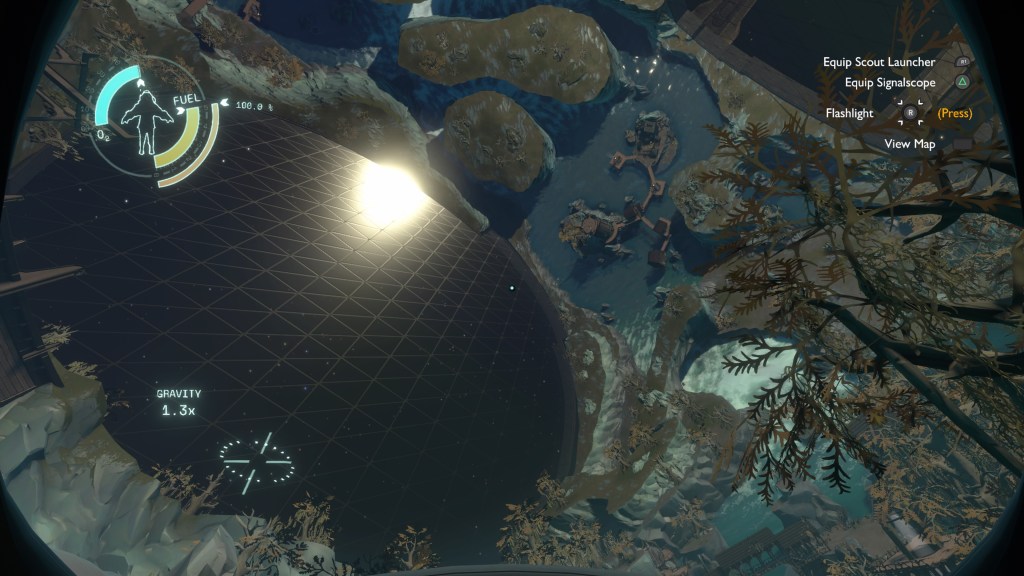
The story of the Stranger and its inhabitants also suffers from the differences. With the Nomai and their writings, you could consistently get a sense of the personalities at play. Each one shining as an individual character with their own take on the events transpiring around them. The Inhabitants however, are afforded no such individuality save for a few instances, including one at the very end of your journey through the Stranger. As in their slides, they are a very visually communicative society, it would appear, and their story, while tragic, doesn’t afford that individual level of sadness that the fates of the Nomai and your Hearthian friends do. As hard as it is to get attached to something with only 22 minutes to get to know them before the sun blasts you to kingdom come, or, like me you accidentally fly your ship into the sun trying to do a cool landing trick, the base game succeeds in many ways that, save for your encounter at the bitter end of your adventure, doesn’t seem to have been a main concern for the Mobius Digital team in the expansion. The design of the Stranger and its inhabitants also seems to borrow from the art of the Native American people of the Pacific Northwest which has some implications that may or may not have been intended with the story of how they came to be in the solar system and why, as well as their design evoking a folkloric monster of the Algonquin people, that leads to me thinking there were some slightly ill considered decisions made for the aesthetics.
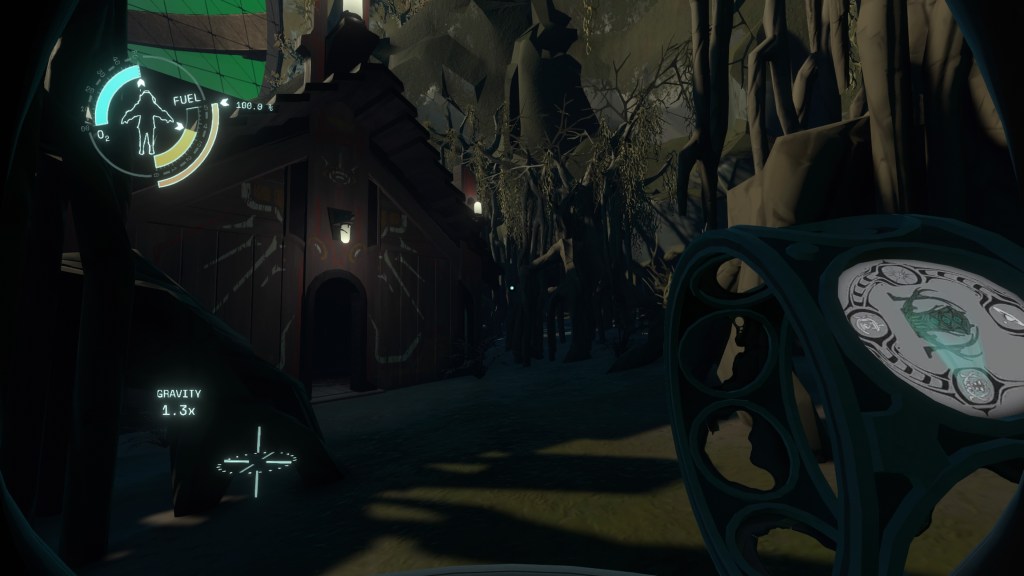
Even with these marks against it, there are so many aspects of “Echoes of the Eye” that do work extremely well. The new instrumental tracks composed by Andrew Prahlow have that same twang and charm but with new layers in the sounds that enhance the atmosphere of the Stranger and the world within. Inclusions of choral music to help set the vibe of the Stranger and its denizens enhances your time on the stranger and suffusing small moments with a mysterious dread and a somber beauty. The theremin inclusion as the main instrument of the denizens also enhances the mildly haunted-mansion vibe of the areas you encounter them in and is used for an incredibly touching finale to the whole experience. Once things start clicking together and the general mechanics begin to unveil themselves to you, as well, the experience in “Echoes” goes from one of, in my case, jumping at shadows and getting frustrated at your ignorance, to smiling at yourself and punching little holes through where you thought there would be no possibility before. The story of the Stranger may not hit as hard as the Nomai’s struggles from the base game for many, but the tragedy of these wanderers got me to my core and the things I uncovered by the end culminated in a short little sequence that, despite its brevity, did the thing I love the most about Outer Wilds: creating a brief moment of companionship and closure between two people from almost incomprehensibly different worlds without a single spoken word.
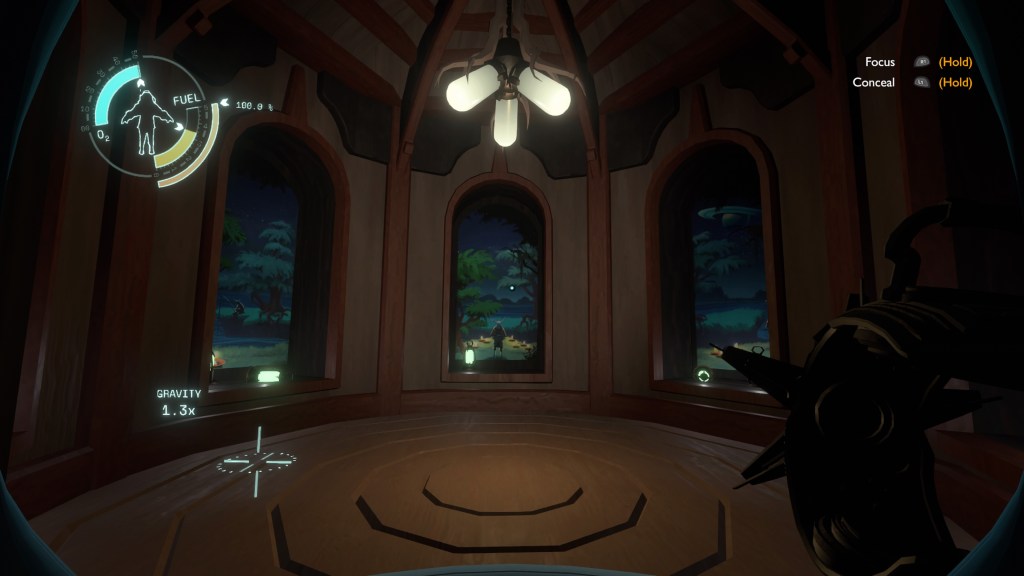
I spent a large chunk of the 8 hours I wandered through “Echoes of the Eye” scared, as a tremendous horror game coward. That dread was the intrinsic feeling through most of it, but even then I had the same joy in cracking the logic puzzles as I had in the base game, even as slightly more frustrating as the adventure was. I can only have hope that, whatever the Mobius Digital team puts their sights on next, it will be as engaging and fascinating as the displays of creativity and feeling that, even without a single word of text or line of dialogue, carried through the Echoes.


 Cold Reads